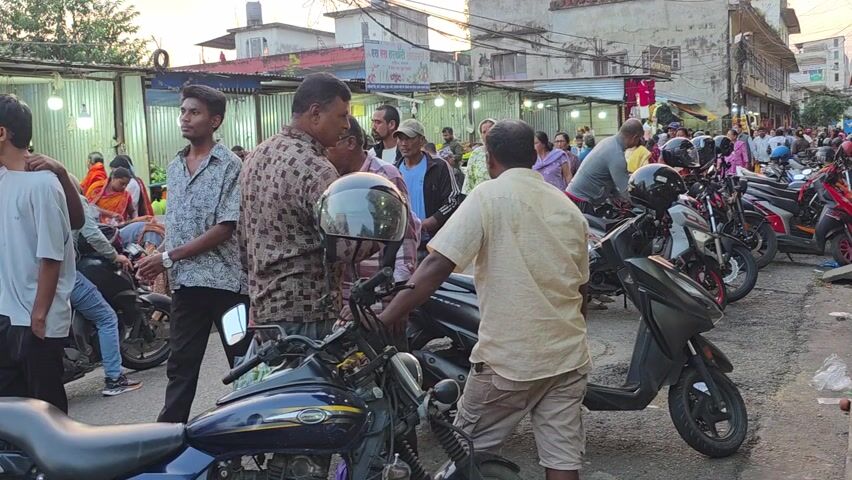
An evening among the people at a market in Hetauda Nepal
Have you ever wondered what life is like for the people running small market stalls in Nepal? How much can they earn, and what does it take to support a family through a small business?
Suresh, our local contributor from Hetauda, takes us through Khopegalli, a small market alley where vendors sell vegetables, fruits, clothes, and street food. He speaks with shopkeepers who have spent decades running their stalls, a young boy helping with business, and customers preparing for Dashain, one of Nepal's biggest festivals.
Join Suresh for an evening in Khopegalli, where he shares the conversations, struggles, and everyday realities of the people who make their living there.
By Suresh — Local Contributor, Hetauda, Nepal
In Hetauda, Nepal, many people depend on small businesses to support themselves and their families. Some sell vegetables and fruits, others run food stalls or sell clothes and shoes. For many, these businesses provide the income needed to manage everyday household expenses.
I wanted to share some of their stories, so I visited Khopegalli, a small market alley in Hetauda that I have known since childhood. This time, I wanted to pay closer attention to the people behind the stalls and understand more about their livelihoods.
An Evening in Khopegalli
It was around 5 PM when I started walking through the market. Vendors had arranged vegetables, fruits, and other everyday goods along the narrow roadside. Customers were moving between stalls, looking at what was available and bargaining over prices.
The road was congested with pedestrians, parked vehicles, and market stalls. There was little room for traffic to pass comfortably, yet business continued as usual.
Khopegalli is a relatively small market, but it attracts many people from the surrounding area. Some come to buy groceries for their families, while others shop for clothes and household items. For the vendors, it is a place where they spend much of their working lives.
Years Spent Behind Small Stalls
One of the first people I met was Bharat, who sells popular Nepali street foods such as Pani Puri and Samosa. He has been running his stall for around twelve years. His earnings are modest, but he has continued working at the same trade for more than a decade.
I wondered how someone could manage a family's daily needs through such a small business.
As I continued walking, I met another vendor who had been running his business for around twenty years alongside his two brothers. He told me that the income was enough to manage his household expenses and that he was reasonably satisfied with his work.
I found it interesting that people working in the same market could have such different experiences. Some were concerned about their earnings, while others had found satisfaction in businesses they had maintained for many years.
Young People and Family Responsibilities
Another thing that caught my attention was the involvement of young people in the market.
I met Sajiyat Alam, a Grade 9 student who had been helping at a vegetable stall for two years. I also met Aman Kumar Sah, a Grade 7 student who was working alongside his family.
Aman explained that his father was not around, which was one reason he was helping with the business. His brothers and sisters were also involved.
Seeing these students working in the market reminded me how family responsibilities can begin at an early age. In Nepal, small businesses are often closely connected to family life, and children or other relatives may become involved in keeping them running.
Different Businesses, Different Lives
Dashain, one of Nepal's major festivals, was approaching at the time of my visit. People were shopping for everyday necessities and preparing for the celebrations. I spoke with Asmita Ale, who had come to buy vegetables for her household.
Farther into the market, I visited First Trend, a clothing shop operated by Ram Prasad Dahal. He had been running the business for five years, selling garments brought from Kathmandu.
His seventeen-year-old son was helping at the shop. Having completed his higher secondary education, he was interested in continuing and developing the family business.
I also met Sunita Baniya, who had been selling shoes and sandals for twenty years. Her son, Pranjal, was helping at the shop, although he also had his own interest in cricket.
These encounters reminded me that not every small business tells the same story. Some people depend entirely on their stalls, while others have additional businesses. Some young people want to continue their family's work, while others have different ambitions.
The Stories Behind Everyday Business
Throughout my walk, I kept thinking about how much of a person's life can be connected to a small business.
As someone who lives in Nepal, I am concerned about the economic difficulties faced by many ordinary people. Political and economic uncertainty can make it difficult to plan for the future, particularly for those who depend on daily sales.
The condition of Khopegalli itself also concerns me. Its narrow, congested road makes it difficult for vehicles and pedestrians to move freely. I believe the local authorities should pay more attention to improving these conditions.
Yet, during my visit, I also met people who were satisfied with their work and others who hoped to develop their businesses further.
A small market stall may not attract much attention from someone passing by. But for the person running it, that stall may represent years of effort and a family's source of income.
Khopegalli is only one small market in Hetauda. I have known this place since childhood, and there are still many stories here that I have never heard.
I hope to return and share more of them in the future.
※ Disclaimer: This story was created by an independent local contributor and reflects their personal experiences, observations, and opinions. Experio does not independently verify all contributor-submitted information and is not responsible for inaccuracies, opinions, or changes in the circumstances described. If you have concerns regarding the accuracy, privacy, copyright, or appropriateness of any content, please contact support@experio.global.