Crooked Cucumbers and Free Tea: A Morning at Türkiye’s First Organic Market
Organic food is about more than what we eat. Behind it are farmers, traditions, and people working hard to grow food responsibly. At Türkiye's first organic market in Istanbul, our local contributor Damla reconnects with a community she once belonged to, sharing personal encounters, the struggles of local producers, and the generosity that makes this market special.
By Damla - Local Contributor, Istanbul, Türkiye
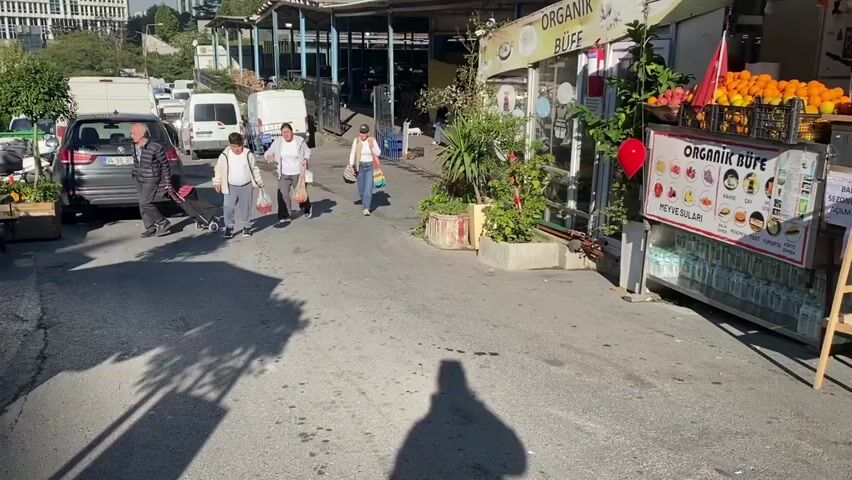
It was one of those sunny Istanbul mornings that make you want to walk everywhere. I was in Bomonti, and on one side of me stood tall glass towers, a reminder of how crowded and packed this city is. On the other side, squeezed in between those buildings, was something completely different: a pure, simple organic market under a tin roof. This is Türkiye’s first organic marketplace.
Türkiye’s First Organic Market
I was part of the community at Feriköy Organic Market, also known as Şişli 100% Ecological Market, years ago. Many people have come and gone since then, but the idea has stayed the same. This isn’t a tourist bazaar. The people standing behind these stalls are the producers themselves. The person who sells you the honey knows the bees, and the person who sells you the olive oil knows the trees. That is what makes it special: when you have a question, the answer comes from the person who grew it, picked it or made it with their own hands.
The Teacher and His Wooden Spoons
One of the first stalls I stopped at was covered in wooden spoons, laid out on a red cloth. The yellow ones are boxwood, and the man selling them told me why he loves this wood so much: it doesn’t absorb oil or water, it doesn’t hold bacteria, and it’s the only wood that can go in the dishwasher. “Buy one,” he said, “and it will last you a lifetime.”
He is a retired physics teacher. My father was a teacher too, and even though he is retired, he still works. So I have a soft spot for people like this, who could rest but choose to keep making things and keep sharing what they know. You can hear the teacher in him when he talks about his spoons. He doesn’t just sell them, he explains them.
The Struggles Behind Organic Farming
A little further in, I talked with one of the producers about what it really means to grow organic food in Türkiye. He didn’t hide his frustration. “We are constantly pushing back,” he said.
He explained that there is no registered bacterial method here to enrich the soil, so farmers have to buy it from abroad and pay a fortune for it. Even the traps they use against pests come from Japan or America. “Why don’t we produce them ourselves?” he asked. “Don’t we have engineers? Don’t we have the means?”
Most people who live here already know the answer. We have the capacity, but for political reasons things don’t move the way they should. In Turkish we would say it feels like carrying a weight on our backs. Many farmers are in debt. Shoppers look at the prices and think they are expensive, but at the end of the day, nobody selling at this market goes home with money left in their pocket. What keeps it alive is a small group of people, like the Buğday Association, who keep giving their time and money so this work can continue.
It sounds heavy, and it is. But that’s okay, because we have each other. You feel that very clearly here.
The Truth About Crooked Cucumbers
The same farmer told me about a belief he hears all the time. Many people in Türkiye think that if a vegetable is dirty, crooked or soft, it must be organic. “That has nothing to do with it,” he said. A cucumber grows crooked when it doesn’t get enough water or catches a fungus. When it gets what it needs, it grows big and beautiful, like the cucumbers he remembers from the village. The only way to know if a product is really organic is a lab test for pesticide residue. So next time you see a perfect-looking tomato at an organic market, don’t be suspicious. Ask the farmer instead.
Honey from the East, Olive Oil from Çanakkale
Everyone at the market is friendly, and everyone wants you to taste. At the honey stall I tried a wildflower honey from Iğdır, made by Caucasian bees, then a stronger one, then a honey from Kars that the seller proudly told me is the only honey with a geographical indication. The taste stayed with me long after. Nobody asked if I was going to buy anything. They just wanted me to try it, and that’s okay too. Sharing is a very big part of our culture. The honey seller comes here every week, and even with the new season he was still selling at last season’s price. If you can’t come back, you can call him and he ships by cargo.
At the olive oil stand, the producer told me their olives come from a single garden in Kemerdere, Çanakkale, and are pressed in stone mills within four hours of harvest, so they keep their nutritional value. “You can cook with it, put it on your salad, or even drink it,” he said, smiling.
Free Tea and “Kolay Gelsin”
And then there is the tea. Here, if you ask someone how their day is going, there is a good chance you will end up with a free glass of tea in your hand. I had mine at the edge of the market, watching people stop and chat at every stall, and it reminded me why this place still feels like mine.
Before I left, I said the phrase I had been saying all morning: “Kolay gelsin.” We use it every day in Türkiye. You say it to the baker, the farmer, the person fixing your sink. It is a wish that whatever someone is doing becomes easy for them. There is no perfect translation in English, but I think it says a lot about us. Even when life feels heavy, we wish each other ease.
That is what this market is to me. Not just a place to buy organic food, but a place where people still look each other in the eye, share what they have, and wish each other an easier day.
If you visit Istanbul, come here. Taste the honey, ask about the spoons, accept the tea, and don’t forget to say “kolay gelsin” when you leave.
Around Bomonti: Old Streets and New Towers
The organic market sits in Bomonti, a neighborhood where different sides of Istanbul meet. Modern glass towers rise above older apartment buildings, while small streets, local businesses, and busy sidewalks continue around them. Even the market itself feels tucked away among the surrounding buildings.
I like how you can see these contrasts within a short distance. The neighborhood has changed over the years, but there are still ordinary streets and familiar places among all the new construction. It's a part of Istanbul that looks quite different from the historic landmarks most visitors come to see.
The Streets Beyond the Market
On another, cloudier day, I took some photographs of the streets around this part of Istanbul. There are quieter cobblestone roads with older buildings, wide streets with shops and apartment blocks, and busy sidewalks where people are simply going about their day.
Getting around is also part of living in a city this large. The metro connects different neighborhoods, while above ground, traffic and pedestrians fill the streets. These are ordinary scenes, but they're also part of the Istanbul I know, beyond the markets and places people usually come to visit.
※ Disclaimer: This story was created by an independent local contributor and reflects their personal experiences, observations, and opinions. Experio does not independently verify all contributor-submitted information and is not responsible for inaccuracies, opinions, or changes in the circumstances described. If you have concerns regarding the accuracy, privacy, copyright, or appropriateness of any content, please contact support@experio.global.