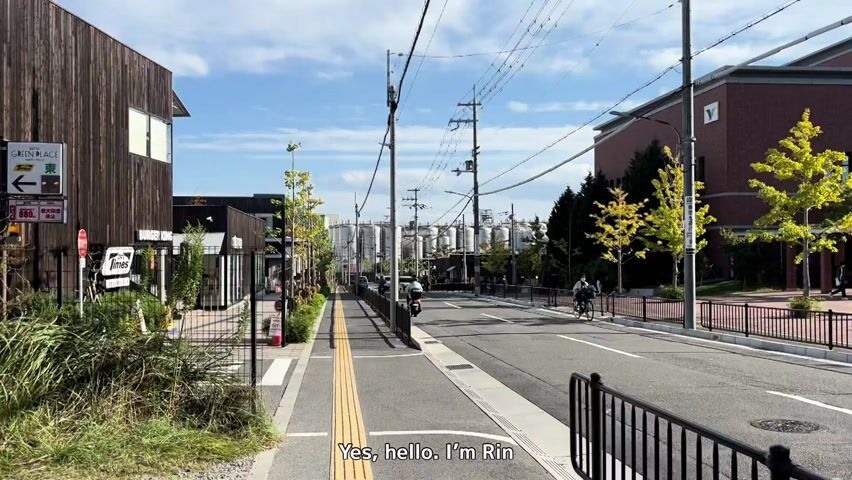
Suita, Osaka: Where the Streets Used to Smell Like Beer
There was a time when the streets around Suita Station smelled of beer from the nearby Asahi brewery. The smell has mostly faded, and much of the neighborhood has changed with it. Born and raised in Osaka, our local contributor Rin takes us through the Suita she remembers and the one she knows today, stopping at old shopping arcades, a bakery she wishes she'd discovered sooner, and quiet streets where traces of the past still remain.
By Rin - Local Contributor, Osaka, Japan
Hi, I'm Rin. I was born and raised in Osaka, and today I'm taking you for a walk around Suita, not far from the centre of the city.
Most people visiting Osaka head straight to Dotonbori, Osaka Castle or the famous food streets. Suita is a little different. It's mostly a place where people live, work, shop and go about their day.
I've known this area for years, but things keep changing. Some of the old shops have disappeared, new buildings have taken their place, and there are streets I barely recognise anymore.
Still, there are plenty of things I love here. Let me show you a few.
The Brewery That Used to Make the Whole Station Smell
Suita has an interesting connection to beer. The first Asahi brewery was built here in 1891, and the company introduced Asahi Beer the following year.
If you walk towards JR Suita Station, you can still see the enormous silver brewery tanks standing behind the buildings.
I remember when I was younger, the smell from the brewery was much stronger. You could sometimes smell it all around the station!
It's difficult to describe, but imagine the smell of beer, only much more concentrated. It was such a familiar part of the area that I almost associated it with Suita Station itself.
These days, I hardly notice it. Maybe the brewing process has changed. I don't really know, but sometimes I miss those little things that used to make a place feel familiar.
There's also an Asahi Beer Museum where visitors can learn about the brewery and enjoy a tasting experience. You'll need to make a reservation, though.
Suita has changed in other ways too. The 1970 World Expo was held here, and the city grew considerably during Japan's period of rapid economic development. Old farmland gradually became residential neighbourhoods, with apartments, houses and shopping facilities.
I appreciate how convenient everything has become, but I do wish we still had more of the greenery I remember.
A Little Shopping and Something to Eat
Around JR Suita Station, there are six shopping streets. They're all slightly different, and I enjoy wandering through them.
Some are quite lively, while others have a lot of closed shutters. It's sad to see shops disappearing, especially the small family businesses that have been here for years.
But there are still plenty of good places to stop.
One of my favourites is Torishin, a chicken shop on Asahi-dori Shopping Street. Their freshly fried karaage is really good, and people sometimes line up to buy it.
They sell both bone-in and boneless chicken. I usually go for the boneless one.
And if you ask me, it's even better with a cold beer!
They also make bento lunch boxes, so it's a handy place to pick up something for lunch or dinner.
I like shops like this. You don't need a fancy restaurant when you can get something delicious from a small neighbourhood shop.
The Bakery I Wish I'd Tried Earlier
There's another shop I want to tell you about, although I only discovered it properly this time.
It's called Guchokipan-ya, a small bakery on Shin-Asahimachi-dori Shopping Street. Apparently, it's been around for more than 30 years, but somehow I'd never bought anything there.
The bakery uses natural yeast and Japanese-grown wheat. It also provides work opportunities for people with disabilities, who help make and sell the bread.
I decided to buy a loaf of sliced bread and take it home.
The next day, I lightly toasted a slice.
It was so good!
I wasn't expecting anything special from an ordinary-looking loaf of bread, but I was genuinely surprised by the taste.
Now I'm wondering why I waited so long to try it.
I'll definitely be going back.
The Older Streets I Still Love
After the shopping streets, I like walking towards Takahama Shrine and the older part of Suita.
The atmosphere is quite different here. There are narrow lanes, traditional houses, little shops and buildings that look as though they've been standing there for a very long time.
One thing I love is passing a tatami shop.
If you're familiar with Japanese tatami mats, you'll know the smell I'm talking about. It's the scent of igusa, the rush grass used to make them.
I find it really nostalgic.
There are also greengrocers and small liquor shops. Places like these remind me of the neighbourhoods I grew up around.
Not everything has survived, of course. Some shops have closed, and there aren't as many old buildings as there used to be. But I'm glad there are still streets where you can get a feeling for what Suita was like in the past.
Another place worth seeing is Hamayashiki, an old residence that has been preserved and opened to the public.
You can walk around the traditional buildings, and they sometimes hold local events and handmade craft markets there.
I think it's nice that the buildings are still being used by people in the community.
A Walk Down to the River
From the older streets, I continue towards Takahama Bridge.
This is one of my favourite parts of the walk because the streets suddenly open up and you get a lovely view of the river.
There are walking paths and little green spaces along the water. On a sunny day, it's a pleasant place to spend some time.
You don't really need to do anything here. Just walk, look around and enjoy being outside.
I think that's something I appreciate more as I get older.
Not every outing needs a special destination or a long list of things to do.
Sometimes I just want to walk somewhere familiar and see what's happening.
There's Still More for Me to Discover
Of course, Suita isn't perfect.
The roads can get crowded, bicycle parking near the station can be difficult to find, and some neighbourhoods aren't as convenient for shopping as others.
I also feel a little sad when I see old shops closing or another familiar place being replaced by a new building.
But then I find something like that bakery.
I've lived in Osaka my whole life, and there's still a shop that's been around for 30 years where I've never tried the bread!
It makes me wonder what else I've been walking past without noticing.
That's what I enjoy about Suita. It's not a city full of famous tourist attractions, but it has good food, old streets, local shops and little things that bring back memories.
If you're visiting Osaka and have some time to spare, why not explore a neighbourhood like this?
And if you happen to find another good bakery, please tell me!
※ Disclaimer: This story was created by an independent local contributor and reflects their personal experiences, observations, and opinions. Experio does not independently verify all contributor-submitted information and is not responsible for inaccuracies, opinions, or changes in the circumstances described. If you have concerns regarding the accuracy, privacy, copyright, or appropriateness of any content, please contact support@experio.global.